2026 Impact Report
College doesn’t just open doors.
It opens entire worlds.
Meet scholars exploring their worlds, and see the range of support our small staff builds around them.
80%
of BCS scholars graduate within 4.5 years
16%
of students from similar backgrounds nationally earn a degree within six years*
105
current scholars
279
alumni
Since 2008, Berkeley Community Scholars has asked our scholars the same question: what makes a college degree possible?
The answer to this question has changed over the years. We listened closely, and this year we made some of the most significant programmatic changes in BCS history. Every one of them began with what our scholars have been telling us.
Our scholars do the work, and we are here to walk alongside them. Thank you for walking with us this year!
Read the Full Letter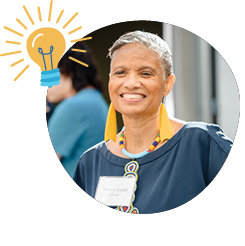
Sherry A. Smith
Executive Director
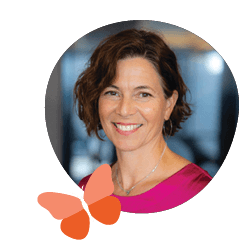
Gwyneth Galbraith
Board President, 2022‑2026
A Note from our Board President
As I step down after five years as Board President, I’m grateful and proud to be part of this extraordinary organization. In that time, BCS welcomed 120 scholars and celebrated 125 graduates, each one a young person whose path to and through college this community supported with great care.
I’m also deeply grateful to Executive Director Sherry Smith and the BCS team, whose devotion to scholars is the engine of BCS’s success. With 10 new board members this past year and a new Board President and Executive Committee, this is an exciting moment of transition. I remain devoted to BCS’s mission and to the impact we can achieve together.
With deep gratitude,
Gwyneth Galbraith,
Board President, 2022-2026
Everything a Degree Takes, in One Program
A degree takes more than tuition. BCS brings all of it into one program. This year, we rebuilt three of the four parts around what scholars told us.
College Success Advising
Every scholar has a college success advisor who knows them personally, from the summer after high school to their first job.
Financial Scholarships
New this year: for the first time in our program’s history, the general scholarship grew from $16,000 to $24,000.
Career Readiness
New this year: a redesigned program built around three steps. Scholars learn through self-paced modules, practice through one-on-one coaching, and connect through the BCS Community Network.
BCS Community Network
New this year: mentoring used to mean one mentor per scholar. Now it means a whole network of professionals and community members.
100%
of graduating scholars surveyed were very satisfied with their advisor.
27
scholars received support from our Emergency, Opportunity, and Finish Line funds
The Opportunity Fund
Opening up a world of possibilities
The Opportunity Fund is for the opportunities that arise in the college environment: a conference, a certification, or an unpaid internship a scholar would otherwise have to pass on.
Scholars find the opportunity, tell us how much funding they need, and why it matters. We respond in days rather than months. Here’s what that looked like for two of the scholars who put the fund to work this year.
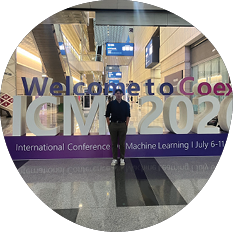
Alex R.
- Senior
- University of Southern California
- Major: Computer science
- Fellow, USC Center for AI and Society
Don’t think your opportunity is too small for the opportunity fund. I think any opportunity is a good opportunity.”
— Alex R.
In July, Alex stood in a conference hall in Seoul and presented his research to a room of people from around the world who study machine learning for a living. The International Conference on Machine Learning is one of the leading forums in the field, where major events are supported by frontier AI labs. Alex had just finished his third year of college.
The flight was his to pay, and summer is when the sources he would normally turn to are closed.
Although he knew about the Opportunity Fund at BCS for years, he hadn’t thought to apply.
“If I don’t necessarily need the Opportunity Fund, then I won’t try to apply for it, because I want the opportunity to be open for other students that don’t have the same opportunities that I have.”
But the opportunity to attend ICML in Seoul was too good to pass up, and the fund would cover his round-trip airfare.
He spent three and a half days in Korea, where he presented his findings and sat in on other sessions. He even asked a question after one of the sessions that led to interesting discussions and a potential future collaboration with a professor he had never met. Mostly, he talked with researchers who had traveled as far as he had, about work that looked like his own.
“We might be hours away from each other, continents away from each other, but we’re doing similar work.”
South Korea was Alex’s first trip to Asia. While he was there, he went north to the DMZ, ate his way through Seoul, and came home an admirer of its subway system.
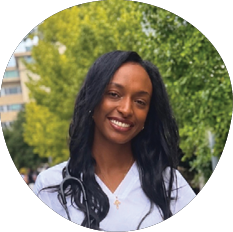
Sifora K.
- Second year
- University of San Francisco
- Major: Nursing
- Certified Nursing Assistant
Just ask. Don’t make the decision for them.”
— Sifora K.
By the time Sifora’s program sent her to her first clinical rotation this fall, she had already spent four weeks on a senior care floor in Castro Valley, taking vital signs and helping patients through the day.
Sifora had interned the summer before in a healthcare setting, but came away wanting more time alongside patients. She had her mind set on a Certified Nursing Assistant certification for that practical experience. Sifora calculated that the CNA certification would cost between $2,000 and $2,500, after registration and transportation fees. The school offered a payment plan, but without a job, the plan wouldn’t help.
So she went looking for scholarships and found the Opportunity Fund in an email from her BCS advisors.
“I didn’t know if going for CNA still qualified for that,” Sifora said.
But she asked anyway, and found out it did. Emily Maciel, her BCS college success advisor, walked her through the forms and how the fund could pay for the certification. After two weeks of lectures and four weeks on the floor, where the nursing assistants let her do the work, Sifora was certified.
Back on campus this term, her instructors assumed she had already been working. They asked her if she had been a medical assistant or a CNA.
“Usually when you go to a hospital and touch people for the first time, you’re like, um, do I do this? Now, I have this confidence that I built over the summer, and I feel kind of fearless.”
The certificate is the first item on a plan she has already mapped out: a CNA job, then intensive care, then a doctorate in nurse anesthesia.
By the Numbers
Every number here is a scholar exploring their world.
Who our scholars are
70%
of current scholars are first generation
87%
of scholars come from families in the lowest economic quartile
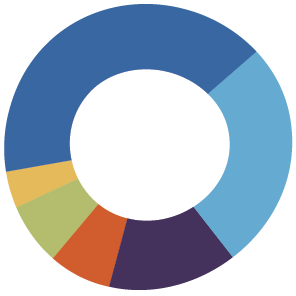
- Hispanic/Latine 42%
- Black/African-American 26%
- Asian/Asian-American 15%
- Middle Eastern/North African 7%
- Southeast Asian/Pacific Islander 7%
- Other 4%
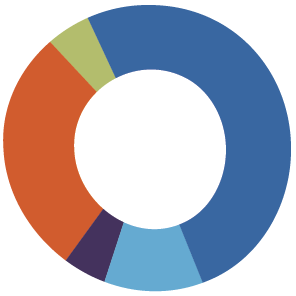
- STEM 51%
- Social Sciences 28%
- Business 11%
- Arts & Humanities 5%
- Undeclared 5%
Where the money goes
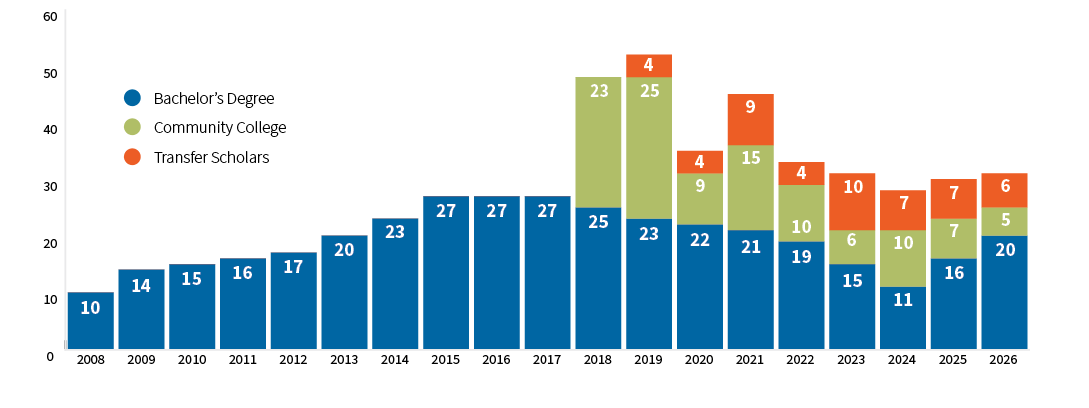
Scholarships Awarded, 2008-2026
* Simone, S. A., & Brunt, N. (2026). Indicators of higher education equity in the United States: 2026 Historical trend report. The Pell Institute for the Study of Opportunity in Higher Education, Council for Opportunity in Education (COE).
The Community Behind Every Scholar
Our scholars do the work, and we are here to walk alongside them. We are grateful to everyone who supported them with their time, talent, dedication, leadership, and gifts.